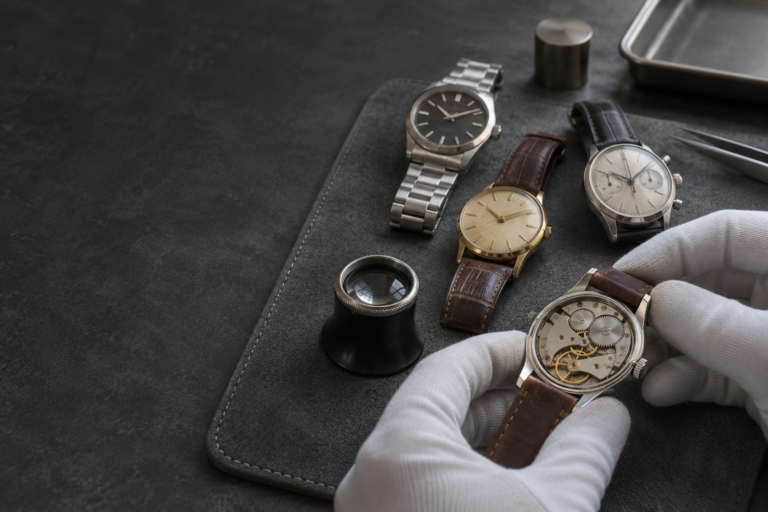
How to Prepare Antiques and Estate Items for Evaluation
Preserve original surfaces, labels, and family information before making changes.
Request an EvaluationDo less before you know more
Cleaning, refinishing, repainting, repairing, or replacing parts can change an antique and sometimes reduce its value. Leave the object as found until it has been identified.
Keep fitted cases, keys, receipts, old photographs, labels, and family notes with the object. Provenance is strongest when documents clearly relate to the item.
Photograph the entire object
Capture front, back, sides, underside, dimensions, and the object in natural light.
Record marks and damage
Include close-ups of signatures, labels, hallmarks, repairs, chips, cracks, and missing parts.
Keep groups together
Do not separate matching pieces, sets, boxes, accessories, or collection records.
What an antique evaluator considers
Age is only one factor. Maker, materials, construction, rarity, condition, provenance, completeness, subject matter, and current demand can all affect interest.
For a large estate, begin with overview photographs and a simple room-by-room or box-by-box list. This helps determine which items need closer inspection.
Visit our pages for antiques and estates, sterling silver, and fine watches.
Frequently asked questions
Should I restore an antique before selling?
No. Ask for guidance first; restoration can alter originality and value.
Can photographs provide a final value?
Photographs help with an initial review, but many items require physical inspection.
What information is useful?
Measurements, marks, condition, family history, receipts, prior appraisals, and related accessories are helpful.
Request a private evaluation
Send overview and detail photographs through the contact form or call (415) 236-2274.
Call (415) 236-2274